
If you’re wondering how to plan the ultimate North Vietnam itinerary to see all the best places as well as some hidden gems, this guide is for you.
This Northern Vietnam itinerary takes you to some of the most incredible destinations in the country.
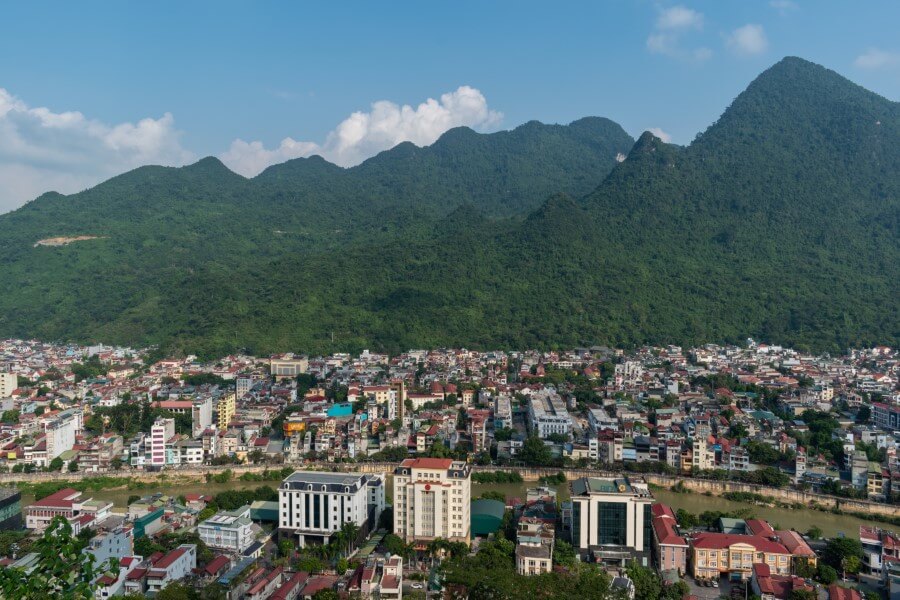
From the chaotic Hanoi that never seems to sleep to the tranquil Ninh Binh Province with its lush rice paddies, soaring karsts, and winding rivers to the UNESCO Heritage Site of Ha Long Bay, the mountainous landscape of Ha Giang, and the impressive Ban Gioc Waterfall that straddles the borders of Vietnam and China.
If this sounds like the perfect trip for you, then keep reading to find out how to plan your Northern Vietnam itinerary for 7 days, 10 days, or 2 weeks.
I’ll also share some tips on how to travel between each destination and the best places to stay.
***This article may contain affiliate links, meaning each time you click through and make a purchase, I earn a small commission at no extra cost to you which helps a lot in keeping this website running. Thank you for your support :)
Read more about Vietnam:
How long to spend in Northern Vietnam?
I recommend spending at least 7 days in North Vietnam as it provides a great introduction to the country. With 7 days, you can easily explore Hanoi, Ninh Binh, and Ha Long Bay.
However, if you’re looking for something more adventurous, you can swap Ninh Binh or Ha Long for the Ha Giang Loop.
For those planning a 10 day Northern Vietnam itinerary, you’ll have more than enough time to visit all four locations.
And finally, if you have 2 weeks, you can travel further up north to Ban Gioc, which is the largest waterfall in Asia.

One thing to note is that you can’t travel between these destinations by plane, so you can only rely on ground transportation which can be time-consuming.
While the journey from Hanoi to Ninh Binh takes only 1.5-2 hours, it takes around 6 hours to travel between Hanoi and Ha Giang.
And although you can take a sleeper bus to avoid a whole day of travel, it’s not the most comfortable and definitely not ideal for getting some sleep (despite it being called a sleeper bus!).
So if you’re not keen on taking sleeper buses, then you’ll need to account for a travel day or two.
Below is a suggested North Vietnam itinerary for up to 2 weeks:
| 7 Days (Option 1) | 7 Days (Option 2) | 10 Days | 14 Days |
|---|---|---|---|
| Day 1-2: Hanoi | Day 1-2: Hanoi | Day 1-2: Hanoi | Day 1-2: Hanoi |
| Day 3-4: Ha Long Bay Cruise | Day 3-4: Ninh Binh or Ha Long Bay Cruise | Day 3-4: Ha Long Bay Cruise | Day 3-4: Ha Long Bay Cruise |
| Day 5-7: Ninh Binh | Day 5-7: Ha Giang Loop | Day 5-7: Ninh Binh | Day 5-7: Ninh Binh |
| Day 8-10: Ha Giang Loop | Day 8-11: Ha Giang Loop | ||
| Day 12-13 : Cao Bang and Ban Gioc | |||
| Day 14: Travel back to Hanoi and fly home |
North Vietnam Itinerary
Hanoi: 2 Days
Your Northern Vietnam itinerary begins in the bustling capital city of Hanoi.
From wandering the narrow streets of the Old Quarter to sampling Vietnamese specialties like egg coffee or Banh Mi, and visiting temples and museums, you’ll find plenty to do here.
I recommend spending at least 2 days in Hanoi if you want to see all the main tourist attractions.
Things to do in Hanoi:
- Wander around Hanoi Old Quarter to do some shopping and explore the temples.
- Take a stroll around Ho Hoan Kiem Lake and visit Ngoc Son Temple.
- Try the famous egg coffee. My favorite is Café Giang but Hidden Gem Coffee and Café Dinh also make great coffee.
- Check out Hanoi night market that takes place every Saturday and Sunday.
- Explore the French Quarter and snap photos with the beautiful Hanoi Opera House.
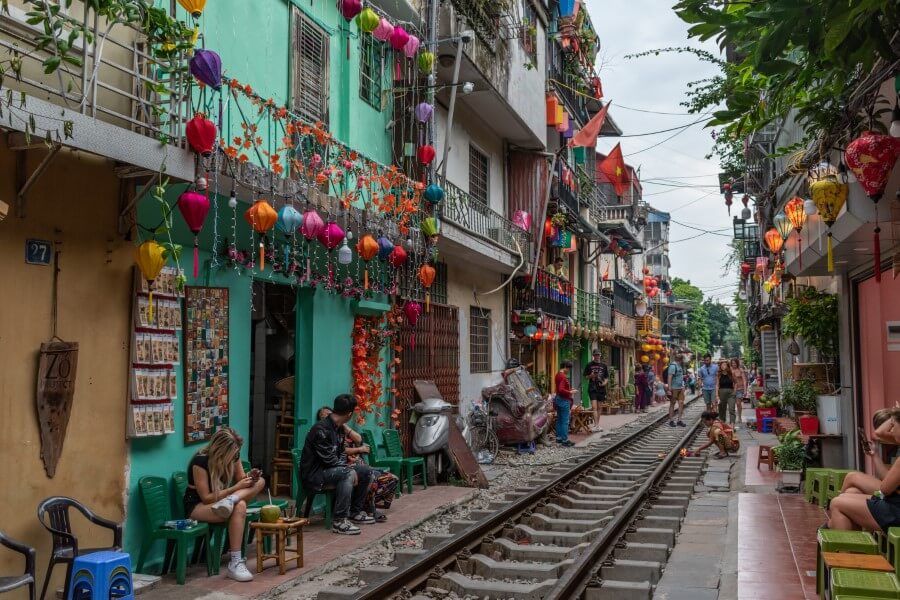
- Watch the train whizz by the famous Train Street, which was closed for a few years but is now operational again in 2024.
- Try out the Vietnamese baguette, Banh Mi, a must on any North Vietnam itinerary! My favorite place to grab is baguette is Banh Mi 25.
- Have a drink on Beer Street.
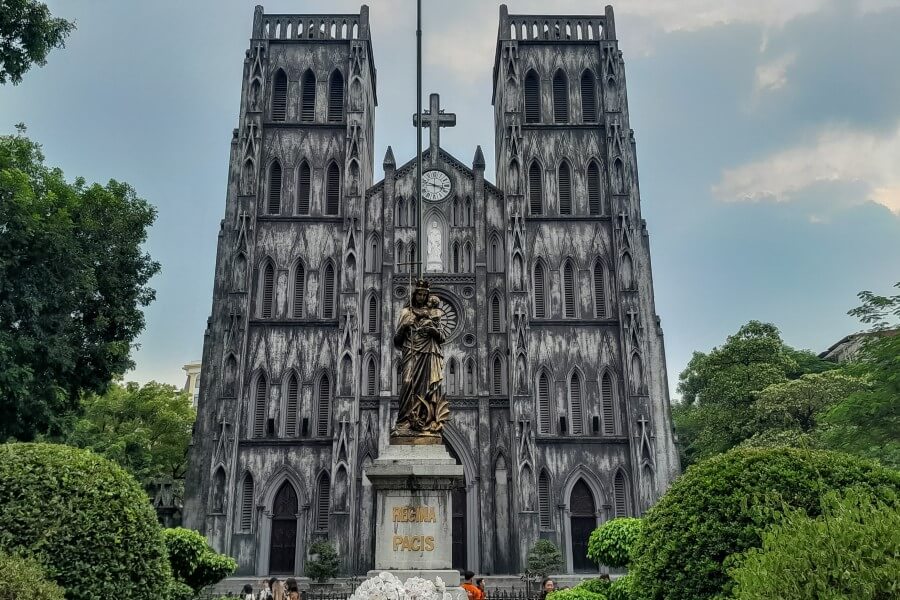
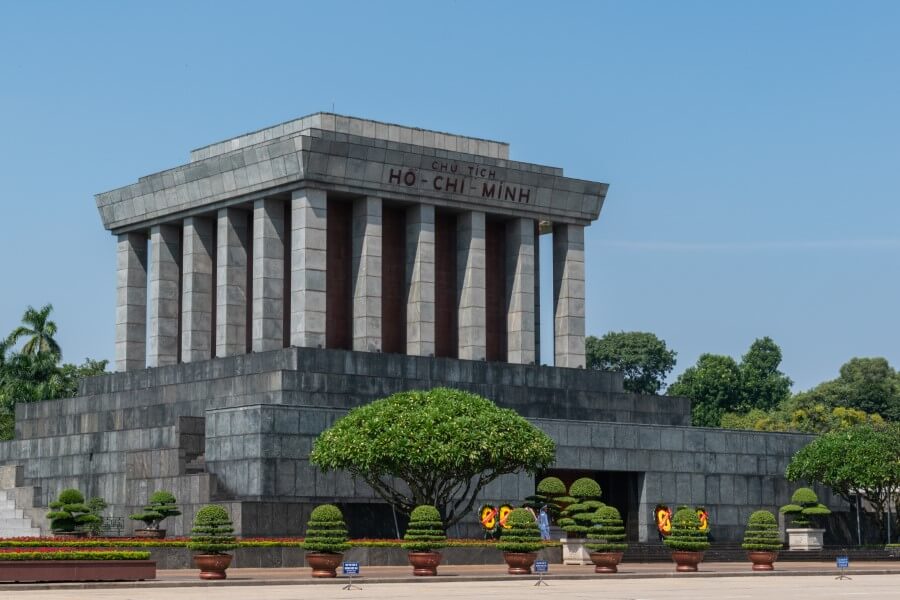
- Other things to do include visiting Ho Chi Minh Mausoleum and One Pillar Pagoda, Quan Thanh Temple, Tran Quoc Pagoda, Temple of Literature, St Joseph Cathedral, and Hoa Lo Prison Relic Museum.

Where to Stay in Hanoi?
I recommend staying in the Old Quarter since most attractions are within walking distance or a short taxi ride away, plus you have a huge range of accommodations to choose from.
I stayed in a private room at An Nam Corner which is located at the edge of the Old Quarter. It was relatively quiet at night, and I could reach the Old Quarter in less than five minutes by crossing the overhead bridge.
For those who prefer staying in hostels, there’s Hanoi Buffalo Hostel, Nexy Hostel, and Old Quarter View Hanoi Hostel, all of which are located in the Old Quarter.
If you’re looking for mid-range to luxury options, take a look at Flora Centre Hotel, L’Signature Hotel, or Sofitel Legend Metropole.
CLICK HERE FOR MORE HOTELS IN HANOI
How to get from Noi Bai Airport to Hanoi?
There are several ways to get to Hanoi from the airport – by bus, Grab, or private taxi.
I opted for a private airport transfer since I arrived in Hanoi early in the morning. The ride took about 45 minutes but may take longer during peak hours.
If you’re on a budget and staying in the Old Quarter, you can instead take the airport bus no. 86.
The bus runs daily from the airport to Hanoi Railway Station from 7 a.m to 10:10 p.m. Tickets cost around 45k VND.
Ha Long Bay: 1-2 Days
There’s no doubt that Ha Long Bay is on most people’s North Vietnam bucket list, including myself.
Cruising across the ocean dotted with limestone karsts, hiking to a viewpoint, kayaking, or swimming in the emerald waters are some of the things you can do during a Ha Long Bay cruise.
I was initially planning to do this Ha Long Bay day trip from Hanoi but since I was too exhausted after my 3-day Ha Giang loop tour, I had to skip it.
The tour has great reviews though and includes Sung Sot Cave, Luon Cave, and Titop Island where you can swim or hike to a viewpoint.
However, if you have more time, it’s best to opt for a 2-day cruise so your trip doesn’t feel too rushed. The 2-day cruise include everything from transportation to and from Hanoi to a cabin suite, food and water, cooking class, kayaks, entrance fees, and more.
Note: If you’re planning your North Vietnam itinerary between December and February, be prepared for cold and foggy weather in Ha Long Bay.
Another thing you should know is that Ha Long Bay is extremely popular so if you wish to avoid crowds, you might consider booking a Lan Ha Bay cruise instead.
Ninh Binh: 1-3 Days
Ninh Binh is famous for its steep limestone karsts, lush rice paddies, and winding rivers.
It was the highlight of my North Vietnam itinerary, so I highly recommend you visit as well.
Ninh Binh offers something for every type of traveler – whether you want to take it easy by going on a relaxing boat ride amid limestone karsts or get your heart rate up by hiking to the top of a mountain offering sweeping views of the valley below.
The landscape is pretty similar to Ha Long Bay so if you can’t afford a Ha Long Bay cruise, Ninh Binh can be a great alternative.

Things to do in Ninh Binh:
- Take a scenic boat ride at the Trang An Complex to see caves, temples, and soaring karst cliffs.
- Hike to the top of Mua Caves Viewpoint for a panoramic view of Ninh Binh.
- Rent a bicycle and explore the hidden corners of Ninh Binh.
- Wander around the massive Bai Dinh Pagoda.
- Snap photos at the iconic entrance gate to Bich Dong Pagoda.

- Learn about Vietnam’s past at its former capital, Hoa Lu.
- Pay a quick visit to the small but beautiful Thai Vi Temple.
- Visit Am Tien Lake and Pagoda.
- Check out the night market to buy souvenirs and sample local dishes.
- If you have time, you can take another boat trip at Van Long Nature Reserve or go on a hiking tour of Cuc Phuong National Park.
For more details, be sure to read my guide to the best things to do in Ninh Binh.

Where to Stay in Ninh Binh?
I stayed at Cherry Homestay and highly recommend it if you’re on a budget and want to be close to the main tourist attractions.
It’s located within walking distance of Mua Caves viewpoint, and they provide free bicycles for guests to explore the area. Breakfast is also included in the room rate.
Other budget-friendly options include For You Homestay which has both dorms and private rooms and incredible mountain views.
Alternatively, if you want to splurge a bit, you can book a stay at Mua Caves Ecolodge, Ninh Binh Hidden Charm Hotel, or Lalita Tam Coc Resort.
CLICK HERE FOR MORE HOTELS IN NINH BINH
How to get to Ninh Binh?
Bus: Several local buses travel between Hanoi and Ninh Binh but if you want to be more comfortable, I recommend taking the limousine bus/van over the regular bus which is faster, taking around 1.5 hours. Ticket price starts at 200k VND. Check price and schedule here
Train: Another option is the train which takes around 2 hours. It’s slightly cheaper than the bus, costing around 150-250k VND depending on the time and cabin class. Check price and schedule here
Taxi: If you’re traveling with a group, you can hire a private taxi starting at USD 40. The total journey should take around 1.5 hours. Check price here
Tour: If you’re short on time, you can take a Ninh Binh day tour from Hanoi. The tour includes Trang An Complex, Bai Dinh Pagoda, and Mua Cave viewpoint as well as hotel transfers, boat tour tickets, lunch, and water. Check price here

Ha Giang: 3-4 Days
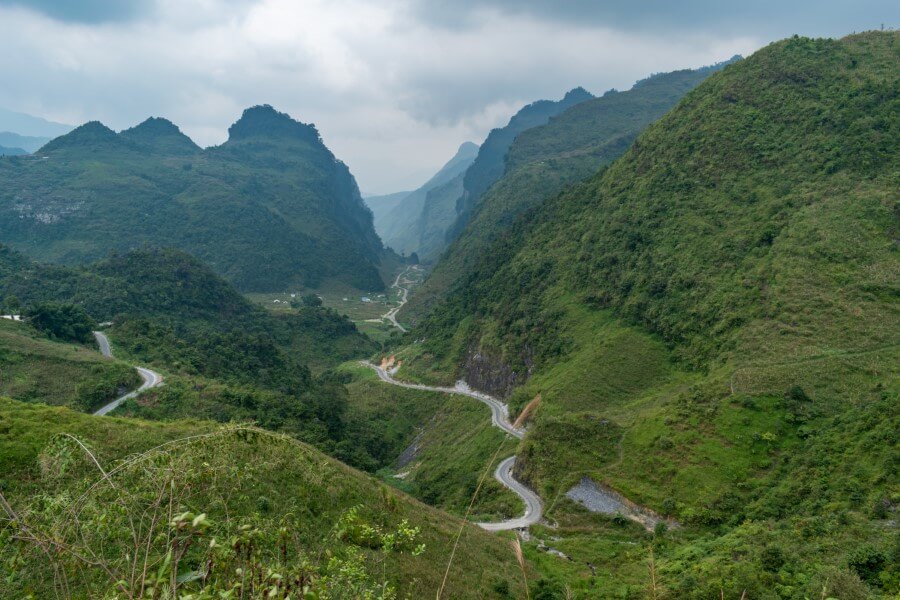
If you want to explore one of the most stunning places in all of Vietnam, then you should add Ha Giang to your Northern Vietnam itinerary.
Situated near the border of China, Ha Giang boasts some of the most dramatic landscapes with epic viewpoints, waterfalls, and hill tribe villages.
The best way to explore this region by renting a motorbike and driving the 300+ km loop.
I did the 3-day Ha Giang loop tour with Easy Rider but if you have more time, you can spend up to a week driving around the loop as there’s so much to see.
The tour includes everything from transportation to and from Hanoi, food, accommodation, entrance fees, an Easy Rider (someone who will drive the motorbike for you), and a tour guide.
Having a local driver means won’t have to worry about navigating the steep winding roads, which can be challenging for inexperienced drivers.
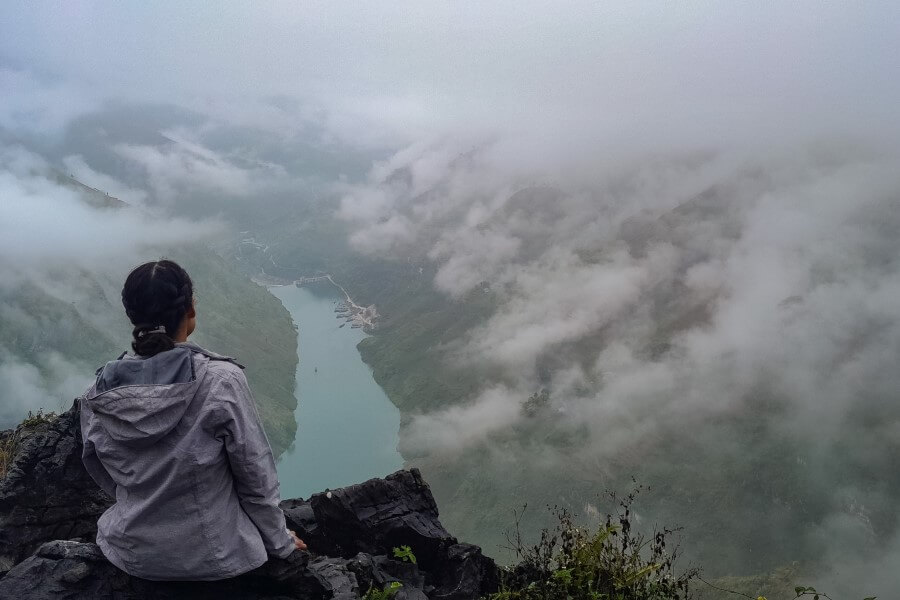
Some of the highlights of the Ha Giang Loop include the Heaven Gate, Dong Van Plateau, Ma Pi Leng Pass, Nho Que River, and Du Gia Waterfall.
Note: If your don’t feel comfortable on a motorbike, you can instead do the Ha Giang loop by car.
Where to Stay in Ha Giang?
If you decide to book the 3-day Ha Giang loop tour with easy rider I mentioned above, you won’t have to worry about finding a place to stay as this will already be sorted out for you.
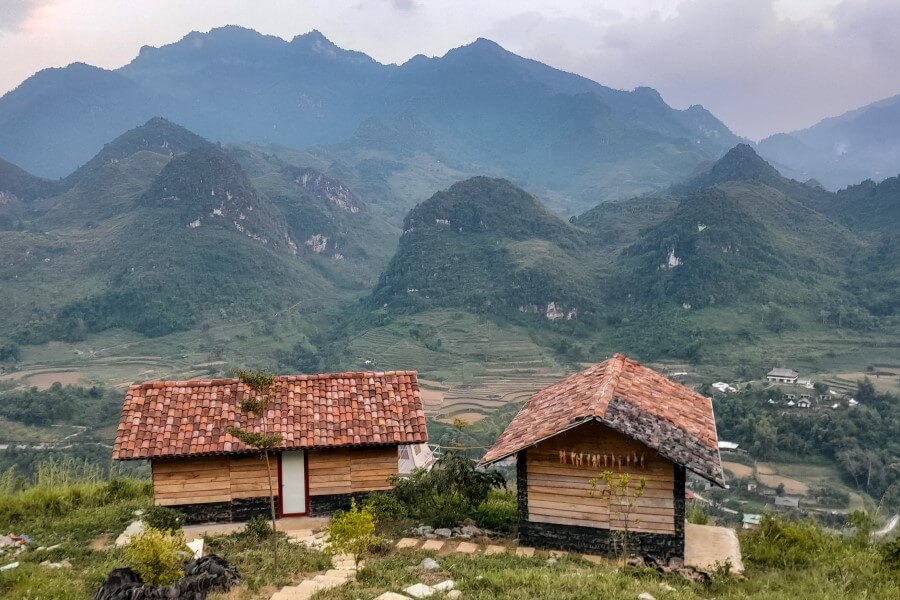
However, if you choose to drive the loop on your own, there are many affordable guesthouses in all the main towns along the loop, such as Yen Minh, Meo Vac, and Du Gia.
I recommend using booking.com or Google Maps to find your accommodation.
Luckily, you don’t have to book far in advance in case you need to switch up your itinerary.
How to get to Ha Giang?
The most popular way to travel from Hanoi to Ha Giang is by sleeper bus. It costs around 250k-300k VND and the journey takes around 6 hours.
However, don’t expect to get a good night’s sleep on the bus as they aren’t the most comfortable and can be quite noisy.
I’ve heard so many horror sorties about the sleeper buses in Vietnam that I opted for the VIP/limousine bus instead, which is more spacious and comfortable.
Tip: If you’re booking this Ha Giang tour, I highly recommend paying a little extra to upgrade to the limousine bus.

Cao Bang and Ban Gioc Waterfall: 2-3 Days
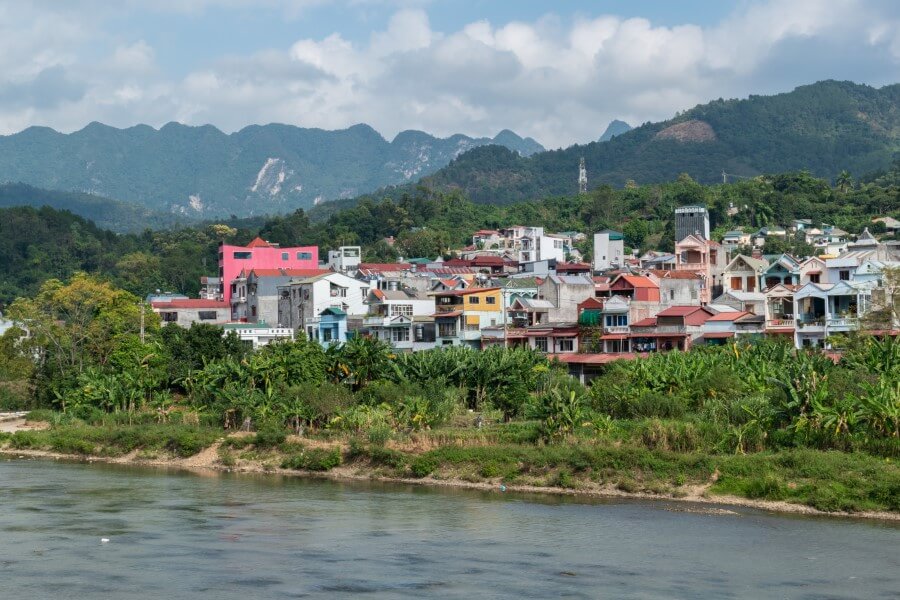
Cao Bang City is located about 300 km north of Hanoi and serves as the gateway to Ban Gioc Waterfall. Although getting there can be a bit challenging, it’s absolutely worth a visit, in my opinion.
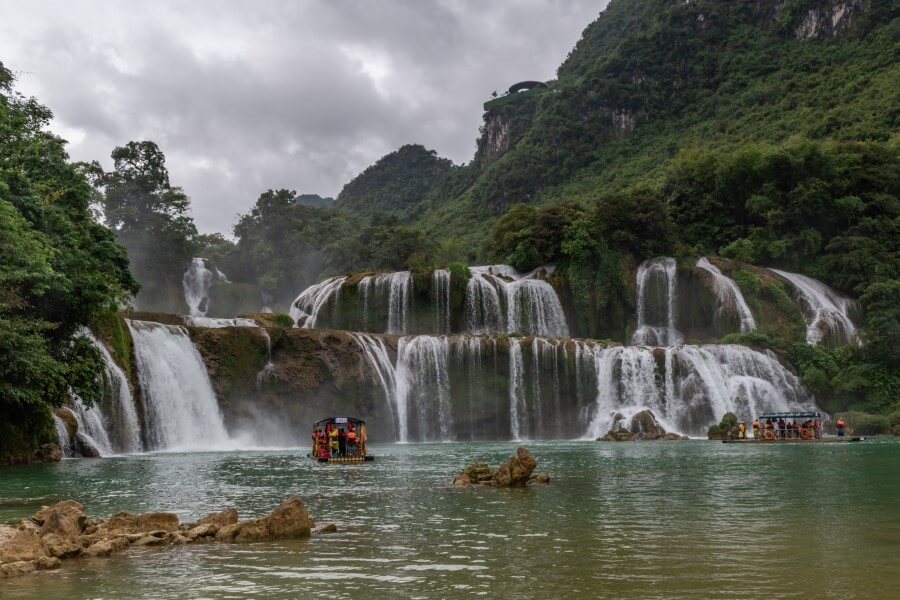
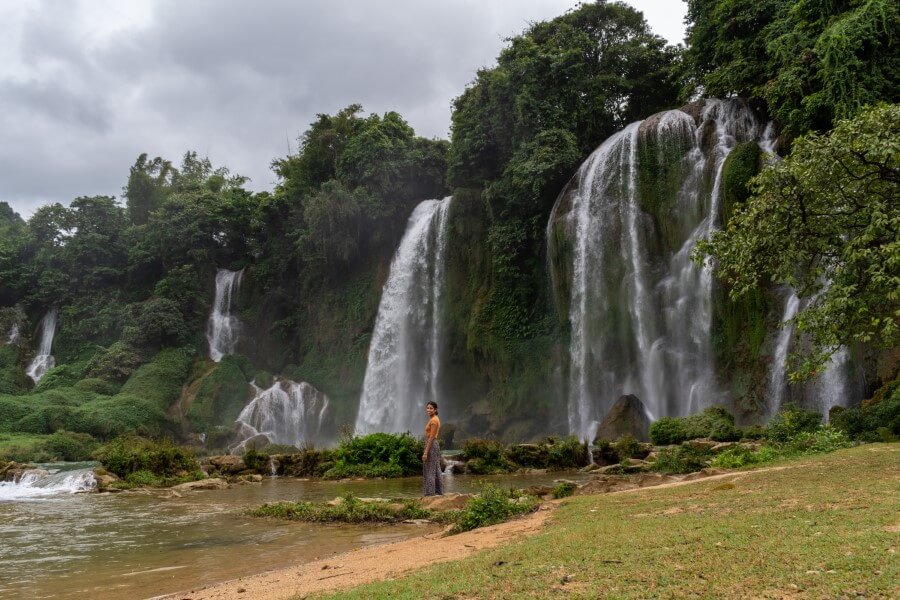
Ban Gioc is the largest and most impressive waterfall in Asia and cascades across the borders of Vietnam and China (you can even see China on the other side of the river!).
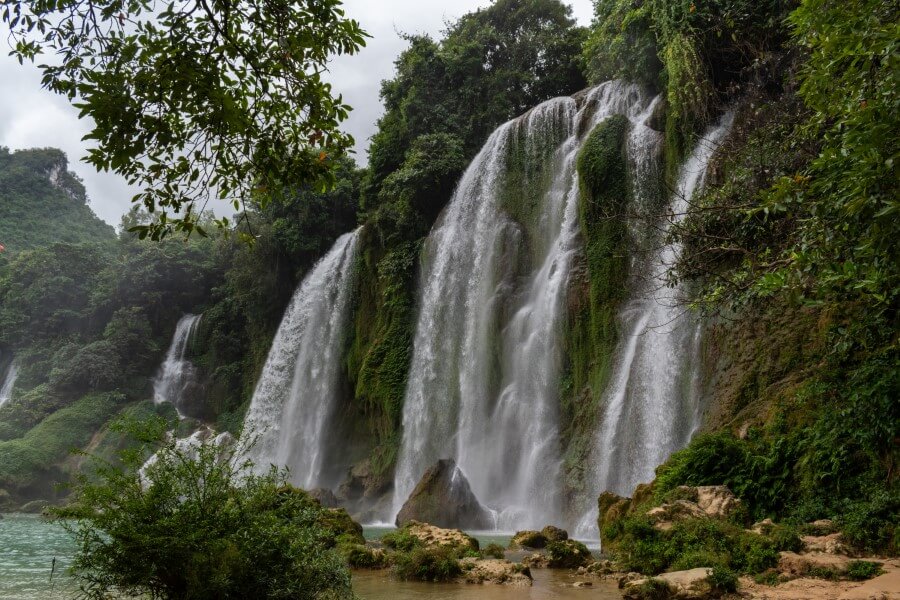
Tip: The waterfall gets super busy after 10 a.m so make sure to visit early in the morning.
After exploring Ban Gioc Waterfall, I recommend checking out the nearby Chua Phat Tich Truc Lam Temple for a bird’s eye view of the waterfall and the surrounding karst mountains.
There’s also a cave about 3 km away but it’s only possible to get there if you have a motorbike or driver.
How to get to Ban Gioc Waterfall?
To get to Ban Gioc Waterfall, you first need to go to Cao Bang City which is located about 2 hours away.
If you’re coming from Ha Giang, you need to take a bus to Bac Me, Bao Lam, or Bao Lac and then another bus to Cao Bang.
It’s best to arrange transportation through your hotel in Ha Giang to guarantee all connections.
Since the bus journey is quite long and tiring (around 7 to 8 hours), I recommend spending the night in Cao Bang before taking a local bus to Ban Gioc the next morning.
The local bus from Cao Bang to Ban Gioc costs 85k VND and departs every 30 minutes to one hour between 5:05 a.m and 5:15 p.m.

After the Ha Giang tour, I actually went back to Hanoi for a few days before going to Ban Gioc. I booked the bus from a travel agent in Hanoi and paid 500k VND.
Note: Not all travel agents sell bus tickets to Cao Bang so if you have trouble finding one, you can book on 12Go instead.
I boarded the bus at Hanoi Opera House, and it took about 6 hours to get to Cao Bang. I spent one night there, and the next morning I took a local bus to Cao Bang from this bus stop at 6:10 a.m.
However, if you’re short on time and don’t want to deal with the logistics of getting there and finding accommodation, you can instead book this 2-day 1-night Ban Gioc Waterfall tour from Hanoi.
It includes transfers to and from Hanoi, 1-night hotel, 2 lunches, 1 dinner, 1 breakfast, water, and a tour guide.
Where to Stay in Cao Bang and Ban Gioc?
I stayed at Hong Van Homestay in Cao Bang, which is located just a few meters from the bus stop to Ban Gioc Waterfall. The room was clean, spacious, and affordable.
Lan’s Home is another great option for accommodation in the city center. They offer both dorms and private rooms at an affordable price.
Alternatively, if you prefer to stay near Ban Gioc, Khuoi Ky Eco Homestay is a great choice. It features both dorms and private rooms and is located about a 5-minute drive from the waterfall, so ideal for those who want to get there early.
CLICK HERE FOR MORE HOTELS IN CAO BANG AND BAN GIOC
Additional Tips for your North Vietnam Itinerary
- Most travelers visiting Vietnam need a visa to enter the country. You can find all the information on visa requirements, fees, and other relevant details on the official website here.
- The best time to visit North Vietnam is from October to November and from March to May. During these months, the weather is generally dry and pleasant without being too hot or too cold.
I hope you found this North Vietnam itinerary helpful. If have any questions, just comment below.